The forgotten Person
Ask most people about the Christian God and they think first of the Father, then of Jesus, then they pause. The Holy Spirit feels less defined. The Spirit is the third Person of the Trinity, fully and equally God, breathed forth eternally by the Father and the Son. He is the Lord, the giver of life, as the Creed has said since the fourth century. He is at work in every grace, every sacrament, every conversion, every act of love.
The Catechism puts it crisply.
No one can say Jesus is Lord except by the Holy Spirit.
Catechism of the Catholic Church §683, citing 1 Corinthians 12:3
You cannot pray, you cannot believe, you cannot love God without the Spirit already at work in you. He goes ahead of every soul that turns to God.
What scripture shows Him doing
The Spirit is everywhere from the first verse of Genesis. The Spirit of God was hovering over the face of the waters (Genesis 1:2). He overshadows Mary at the Annunciation (Luke 1:35). He descends like a dove at Christ's Baptism. On Easter evening, the Risen Lord breathes on His apostles and says, Receive the Holy Spirit. If you forgive the sins of any, they are forgiven (John 20:22).
Then comes Pentecost. Fifty days after the Resurrection, the apostles are gathered in one room with Mary. Suddenly there came from heaven a noise like a strong driving wind, which filled the entire house. Then there appeared to them tongues as of fire, and there came to rest on each one of them. They were all filled with the Holy Spirit (Acts 2:2-4). The terrified disciples step out into the streets and start preaching. Three thousand are baptised that day. The Church is born.
The Spirit and the sacraments
The Spirit is the one who acts in every sacrament. The priest is the visible minister. The Holy Spirit is the invisible power.
- Baptism. The Spirit washes away original sin and brings the soul to new life as a child of God.
- Confirmation. The Spirit is poured out on the candidate with the seven gifts: wisdom, understanding, counsel, fortitude, knowledge, piety, and fear of the Lord (Isaiah 11:2).
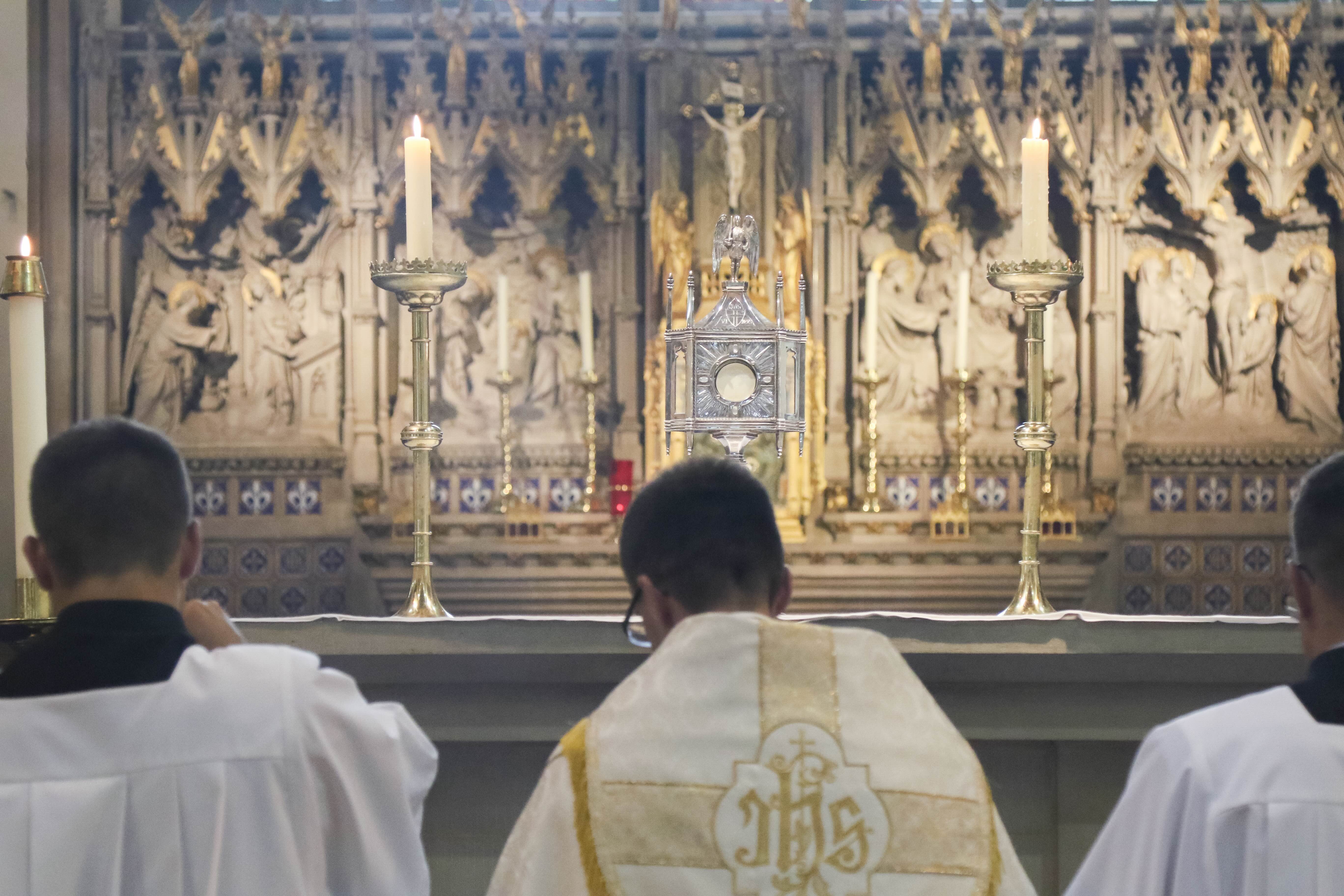
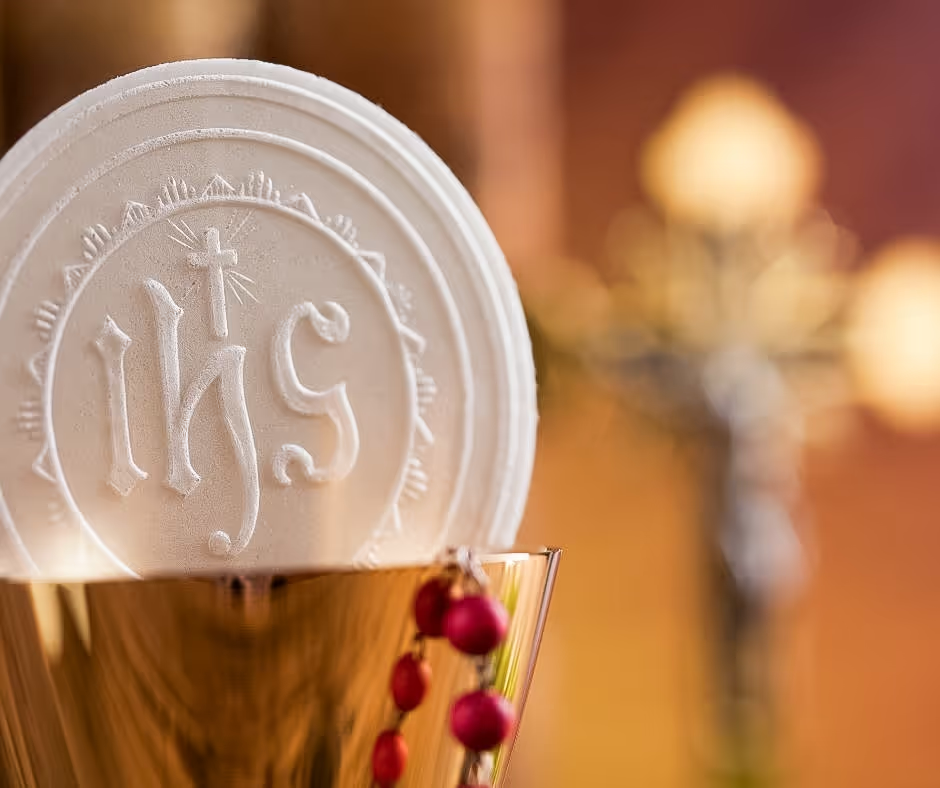
- The Eucharist. At the heart of the Eucharistic Prayer the priest invokes the Spirit, asking the Father to send Him so that the bread and wine may become the Body and Blood of Christ. This prayer is called the epiclesis.
- Confession. The forgiveness given to sinners flows from the Risen Christ's gift of the Spirit on Easter evening.
- Marriage and Holy Orders. Both invoke the Spirit to consecrate a vocation that lasts a lifetime.
The Second Spring of the Church
St John Henry Newman, in his famous 1852 sermon at Oscott, addressed the bishops of the newly restored Catholic hierarchy in England. Among them was Bishop James Brown, the founding bishop of the Diocese of Shrewsbury, just one year into his mission. Newman called what they were seeing a Second Spring, prophesying that Shrewsbury
If the world lasts, shall be name as musical to the ear, as stirring to the heart as the glories we have lost; and Saints shall arise.
Saint John Henry Newman, Second Spring sermon, 1852
That sermon was Newman reading what the Holy Spirit was doing. The Church in England, written off after three centuries of suppression, was springing back to life. Bishop Mark Davies has returned to that prophecy in his 175th anniversary letter and again in his 2026 Lent letter, pointing to the surge of converts now seeking baptism in this same Diocese of Shrewsbury. 171 candidates at the 2026 Rite of Election. 12 men in formation for the priesthood. The same Spirit that fell at Pentecost is at work in the same diocese, two thousand years on.
How Catholics meet the Spirit today
You do not have to wait for visions and tongues of fire. The Spirit comes mostly in the quiet.
- In Confirmation. Every Catholic is sealed with the Holy Spirit. The bishop lays his hand on the candidate and anoints them with oil.
- In personal prayer. Romans 8:26 says the Spirit prays in us with sighs too deep for words.
- In conscience. The Spirit pricks the heart, makes us uncomfortable with sin, prompts the right word, quietly steers us towards the good.
- In the Eucharist. Every Mass at Shrewsbury Cathedral includes the epiclesis, the prayer to send the Spirit on the gifts. The saints whose relics rest in the new Cathedral altar, Polycarp, Vianney, and the Uganda Martyrs, are all evidence of what He produces in a human life.
Your next step
If you have never asked the Holy Spirit for anything, ask Him for one thing this week. The traditional Catholic prayer is short and very old. Come, Holy Spirit, fill the hearts of your faithful and kindle in them the fire of your love. Pray it slowly, every morning, for seven days, and notice what shifts.
If you want to know more about Confirmation, contact your local parish through dioceseofshrewsbury.org or email the Curia at info@dioceseofshrewsbury.org. The Spirit who fell at Pentecost still falls in the Diocese of Shrewsbury.