What a sacrament is
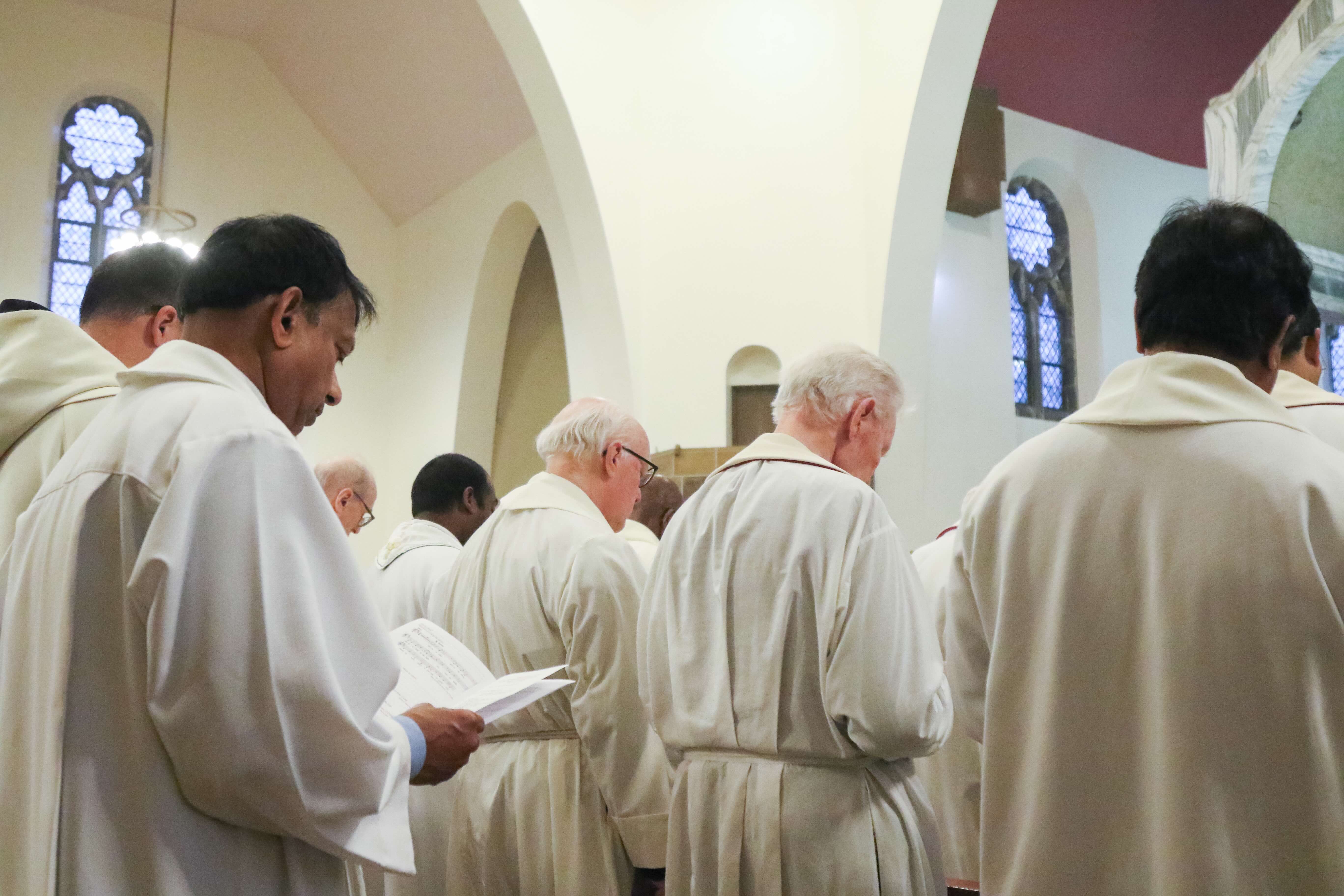
A sacrament is an outward sign of an inward grace, instituted by Christ. The Catechism puts it plainly: sacraments are "efficacious signs of grace, instituted by Christ and entrusted to the Church, by which divine life is dispensed to us" (CCC §1131). Water, oil, bread, wine, words spoken, hands laid on a head. The matter is ordinary. The grace is not.
The Church groups the seven sacraments into three families. The sacraments of initiation (Baptism, Confirmation, Eucharist) make a Christian. The sacraments of healing (Reconciliation, Anointing of the Sick) restore what sin and suffering damage. The sacraments of service (Holy Orders, Matrimony) consecrate two specific paths of self-gift to Christ and to others.
The sacraments of initiation
Baptism is the door. Saint Paul calls it being buried with Christ and rising with him (Romans 6:4). The Catechism teaches that Baptism makes us "members of Christ; we are incorporated into the Church" (CCC §1267). In Shrewsbury Diocese, the surge of adult Baptisms is now the lead pastoral fact of our time. At the 2026 Rite of Election the Cathedral could not hold every candidate in one liturgy, so Bishop Davies celebrated the rite twice on the First Sunday of Lent. 171 adults were elected, up from 100 the previous year.
Confirmation completes Baptism. The bishop, or a priest he delegates, anoints the candidate's forehead with the Oil of Chrism and prays for the seven gifts of the Holy Spirit. The Chrism is consecrated by the Bishop himself at the Chrism Mass each Holy Week, alongside the Oil of the Sick and the Oil of the Catechumens. From the Cathedral on Town Walls these three oils are then carried out to every parish in the diocese for the year ahead.
The Eucharist is the heart of everything. Bishop Davies returns to this point more than any other:
"We are to find in the Eucharist the Church's entire spiritual wealth, Christ Himself, so we will never have far to go to find him."
(Bishop Mark Davies, Chrism Mass homily, Shrewsbury Cathedral)
The new altar of the Cathedral, dedicated by the Bishop in recent years, holds the relics of Saint Polycarp, Saint John Vianney, and Saint Charles Lwanga and the Martyrs of Uganda. Every Mass offered on it is offered above the bones of those who died for Christ.
The sacraments of healing
Reconciliation, also called Confession or Penance, is the sacrament of return. Christ gave the Apostles the words: "Whose sins you forgive are forgiven them" (John 20:23). The Catechism calls it "a true spiritual resurrection" (CCC §1468). For anyone who has been away from the Church for years, this is where the door reopens. Bishop Davies has often pointed to Pope Francis' Year of Mercy in 2015, which saw many return to sacramental confession after long absence.
The Anointing of the Sick is for those weakened by serious illness or age. The priest anoints the forehead and hands with the Oil of the Sick, praying for healing of body and soul, and forgiveness of sin. Saint James gives us the rite almost word for word (James 5:14-15). It is not only for the dying. Anyone facing surgery, a hard diagnosis, or the slow weight of age may ask for it.
The sacraments of service
Holy Orders configures a man to Christ as priest, prophet and king. There are three degrees: deacon, priest, bishop. Twelve men are currently in formation for the priesthood of Shrewsbury, supported by the Vocations Group, the Discernment Year between St Joseph's Stockport and the Cathedral, and the daily prayer of the Eucharistic Shrine. When the Bishop ordains a new priest, he traces the same apostolic line that runs back through Bishop James Brown in 1851 to the Apostles themselves.
Matrimony unites a man and a woman in a lifelong covenant that mirrors Christ and the Church (Ephesians 5:32). The spouses are the ministers; the priest or deacon is the Church's witness. The diocesan Marriage and Family Life office, with Jane Deegan and Monika Golembiewska, supports couples preparing to marry across Cheshire, Shropshire and the Wirral.
Why all seven, and why now
The seven sacraments are not a checklist. They are seven points where Christ acts in your actual life: when you are born again in water, when the Spirit seals you, when you eat the Bread of Life, when you confess and are absolved, when you are anointed in suffering, when a man is ordained for the altar, when two people give themselves to each other for life. The Catechism gathers it in one sentence: "The seven sacraments touch all the stages and all the important moments of Christian life" (CCC §1210).
A next step
If you are a Catholic and have not been to confession in a long time, the Cathedral offers the sacrament every Saturday. If you are not yet baptised and want to begin, contact your local parish priest, or write to the diocesan Mission Secretary about OCIA: info@dioceseofshrewsbury.org. Walk into the Cathedral at midday on a weekday, sit at the back, and watch the Mass. The seven sacraments are not concepts. They are doors, and they are open.