St Hilda of Whitby was born in Northumbria in 614, daughter of Hereric, a nephew of St Edwin, King of Northumbria.
At the age of 13, she was baptised by St Paulinus and continued to live “most nobly in the secular state”, according to St Bede, until she became a nun at the age of 33 years.
She travelled to the kingdom of the East Angles, where her cousin, King Anna reigned, and, according to Butler’s Lives of the Saints it seemed that her intention at the time was to retire to the monastery of Chelles in France where her sister, Hereswitha, served God as a part of the community.
St Aidan persuaded Hilda, however, to return to Northumberland and to settle in a nunnery upon the River Wear.
She became abbess of Heiu’s double monastery (for both monks and nuns) at Hartlepool and began to reform it in accordance with “her innate wisdom and love for the service of God”.
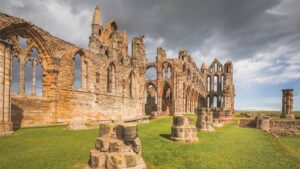
It was only some years later that St Hilda was transferred to Streaneshalch, a settlement later known by its Viking name of Whitby, either to form a new monastic community or reform an old, existing one, again for both monks and nuns.
There, St Hilda fulfilled her office so well, St Bede tells us, that kings and princes, as well as ordinary people, came to her for advice and good counsel.
“She obliged those who were under her direction to attend much to reading the Holy Scriptures and to exercise themselves freely in works of righteousness in order that many there might be found fit for ecclesiastical duties and to minister at the altar,” wrote St Bede.
Several monks of her community later became bishops, including St John of Beverley, and the poet Caedmon served the monastery and later took the habit at St Hilda’s suggestion.
In 664 Whitby Abbey was chosen as the venue of the great synod that was summoned to resolved disputed local questions, and most notably which day the Church should celebrate Easter.
St Hilda sided with the Scots in favour of the local customs but she accepted, in the end that Roman customs should be observed in Northumbria, an argument advanced by St Wilfrid and accepted by King Oswy.
Seven years before her death, St Hilda developed an illness which never left her, but “never failed either to return thanks to her Maker or publicly and privately to instruct those under her care”, warning them “to serve God dutifully when in health and to remain grateful to Him in adversity or bodily infirmity”.
She died at dawn on November 17, 680, and her passing was transmitted supernaturally to a nun at the abbey’s daughter house at Hackness 13 miles away, who gathered together with other nuns in prayer until brothers came with the news about St Hilda’s death and of the place where she died.
A cult emerged almost instantly in reverence of the great abbess and her name appeared on the calendar of St Willibrord at the beginning of the eighth century. Her abbey was destroyed by the Danes and her relics were either lost or translated to a place now unknown.