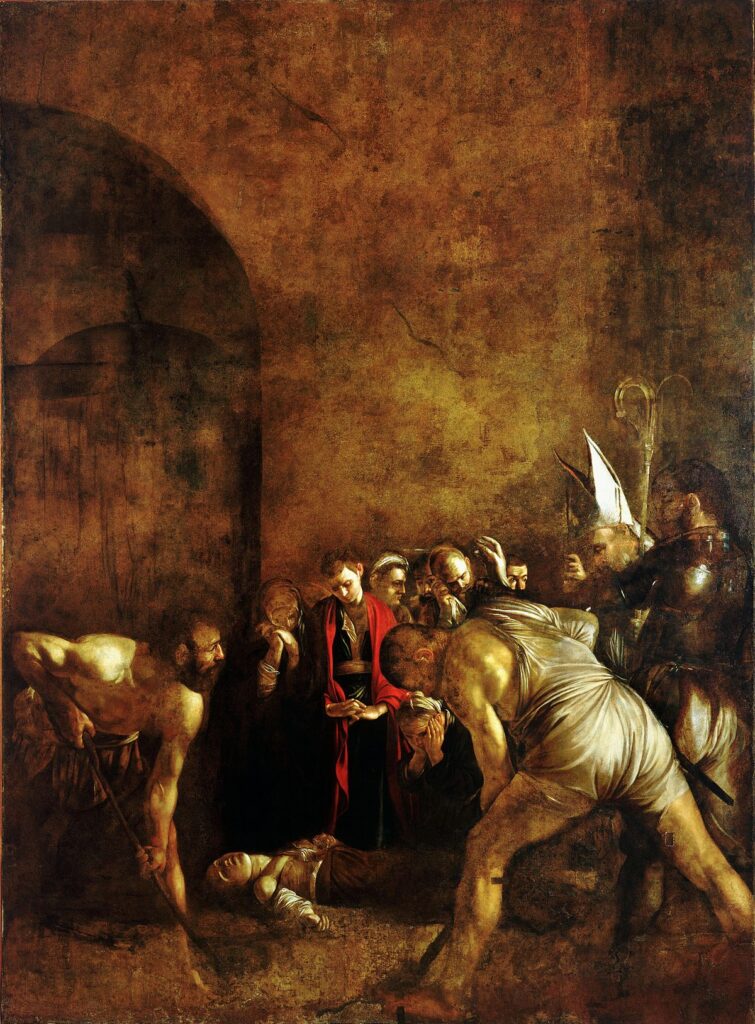
St Lucy was honoured by the early Church as one of the most illustrious of the virgin martyrs.
She was a Sicilian born into a noble and wealthy Christian family in the city of Syracuse and she lost her father in infancy. At an early age she vowed to offer her virginity to God but kept this calling a secret.
According to her acts, recorded by Butler’s Lives of the Saints, her mother, Eutychia, wanted her to marry a young pagan man. Lucy dealt with the problem by persuading her to make a pilgrimage with her to the tomb of the martyr St Agatha in Catania and pray there for healing of a haemorrhage from which her mother suffered.
When Eutychia was miraculously cured Lucy disclosed her desire to devote herself entirely to God and to give her fortune to the poor. Grateful for the healing she had received Eutychia gave her daughter her blessing.
The potential suitor, however, was furious that his wedding plans were in ruins and he took revenge by complaining to the Roman authorities that Lucy was a Christian.
At that time – 304 AD – the ferocious persecution of Christians under the Emperor Diocletian was at its height and Lucy was brought before a judge who decided to punish her by having her thrown into a brothel.
But God rendered immovable, according to her acts, and the guards were unable to carry her there. An attempt to burn her was unsuccessful so at length a sword was thrust into her throat.
St Lucy’s acts are not considered to be an historically accurate document but what is beyond dispute, however, is her connection with Syracuse and the evidence of an early cult in her honour, and that she was popularly and widely celebrated as both a virgin and a martyr. By the sixth century her name had been inserted into the canon of the Mass in both Rome and Milan, for instance.
During the Middle Ages, Lucy was often invoked by Christians who suffered from trouble with their eyes or sight. One explanation may be the connection with her name to light or lucidity. But there was also the legend that during her martyrdom her eyes were put out – then were miraculously restored to her. She is often depicted in art holding her eyes before her on a plate.
(The Burial of St Lucy by Caravaggio)